
You asked
Can I catch syphilis if someone with sores touches me?
This question came from the comments on this video:
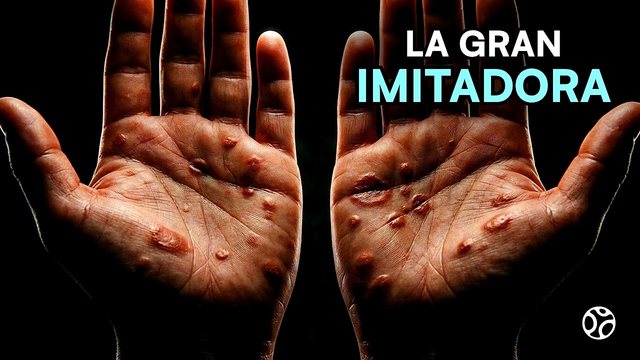 Syphilis: the infection that disguises itself as almost any disease
Hearing Spanish on YouTube? Tap ⚙ › Audio track › English
Yes, if there is direct contact with an active sore, such as the chancre, the painless ulcer of the first stage. Second-stage lesions, which show up in moist areas, are also very contagious. It almost always spreads during sex, and a handshake when no sores are present does not pass it on.
Do you have to have sex to get syphilis?
Mostly, yes. Syphilis spreads during oral, vaginal or anal sex, through contact with an infectious sore. It can also pass from mother to baby during pregnancy, which is called congenital syphilis. Less often, it spreads through blood transfusions or by sharing needles to inject drugs.
Can I catch it from surfaces like handrails, a swimming pool or a shared mate?
No. Syphilis does not spread through handrails, doorknobs, toilet seats, pools or bathtubs. Clothing and eating utensils don't spread it either, and mate is not a documented route; the risk is considered very low. It takes direct contact with an active sore on the skin or in the mouth, anus or vagina.
How do I protect myself beyond condoms, for example if the sore is in the mouth?
Avoid contact with any sore, though depending on its location you may not see it. A condom protects only the skin it covers. For oral sex, use a condom on the penis or a latex barrier on the vagina. WHO advises a yearly test for people at higher risk. If you test positive, your partners get checked and treated too.

Micrograph: Human Protein Atlas, Skin (normal tissue), CC BY 4.0.
Where this comes from
This is educational content, meant to help you understand your body. It is not a medical consultation or a diagnosis, and it does not tell any particular person what to do. If something worries you, see a doctor you trust.