
You asked
If they remove the tumor, why does breast cancer come back for some women and not others?
This question came from the comments on this video:
 Cancer: the exact moment a cell betrays your body
Hearing Spanish on YouTube? Tap ⚙ › Audio track › English
Also came up on 5 more videos
 Why cancer wastes the body .. science is beginning to understand itYouTube · English audio
 A bacterium from your mouth could be accelerating breast cancerYouTube · English audio
 Pancreatic cancer: the pill that finally doubled survivalYouTube · English audio
 A reel by Dr. Carlo on FacebookFacebook
- A reel by Dr. Carlo on FacebookFacebook
It comes back when a few tumor cells remain, too few for any test to detect. Later they grow, in the breast or far from it. A new tumor in either breast is a separate cancer, unrelated to the first. The risk is lower for early-stage cancer and higher when lymph nodes are involved or the cancer is triple-negative.
If what's damaged is the brake on cell growth, won't it always come back even after they remove the tumor?
No. In most women, the broken brake exists only in the tumor, so removing the whole tumor ends the cycle. Inherited mutations like BRCA are different: every cell starts out with the brake only half working. So a new tumor can appear in either breast, and follow-up is key. A recurrence grows from cells left behind.
Does the type, like grade 3 ductal or triple-negative, affect whether it comes back?
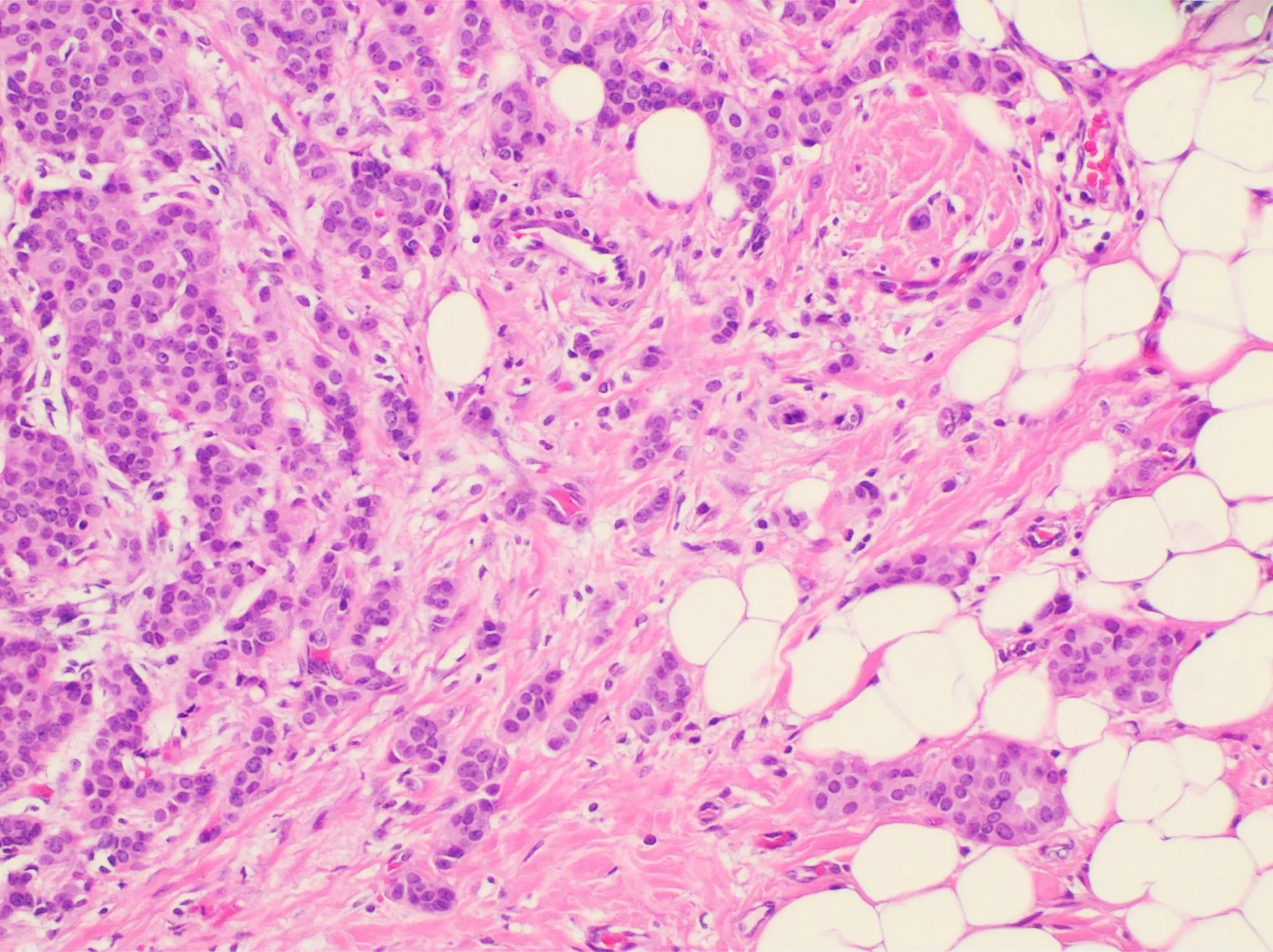
Yes, grade 3, with very disorganized, fast-dividing cells, raises the risk. Tumor size, lymph nodes and subtype also matter. Triple-negative cancer lacks hormone receptors and HER2, so those therapies don't help. It comes back more often, but usually responds well to chemo, its main treatment.
If it's caught at stage 1, what treatment follows surgery to keep it from coming back?
After surgery, the oncologist builds the plan around hormone receptors and HER2. If the breast was preserved, most people get radiation. For hormone receptor-positive tumors, hormone therapy is added, usually for at least 5 years. HER2-positive ones usually get trastuzumab, and triple-negative ones may then get chemo.
Where this comes from
- National Cancer Institute (NCI) – PDQ: accessed 2026-10-14
- American Cancer Society (ACS): accessed 2026-10-14
- Early Breast Cancer Trialists' Collaborative Group (EBCTCG), NEJM 2017: accessed 2026-10-14
- American Cancer Society (ACS): accessed 2026-10-14
- NCI: accessed 2026-10-14
- Dent et al., Clin Cancer Res 2007 (article): accessed 2026-10-14
- NCI (National Cancer Institute): accessed 2026-10-14
- American Cancer Society (ACS): accessed 2026-10-14
- American Cancer Society (ACS): accessed 2026-10-14
- American Cancer Society (ACS): accessed 2026-10-14
This is educational content, meant to help you understand your body. It is not a medical consultation or a diagnosis, and it does not tell any particular person what to do. If something worries you, see a doctor you trust.