Preeclampsia · Visual journey

When pregnancy raises the mother’s blood pressure.

After week 20 of pregnancy, blood pressure rises and organs such as the kidneys or liver come under strain, often without symptoms. It all seems to start in the placenta.
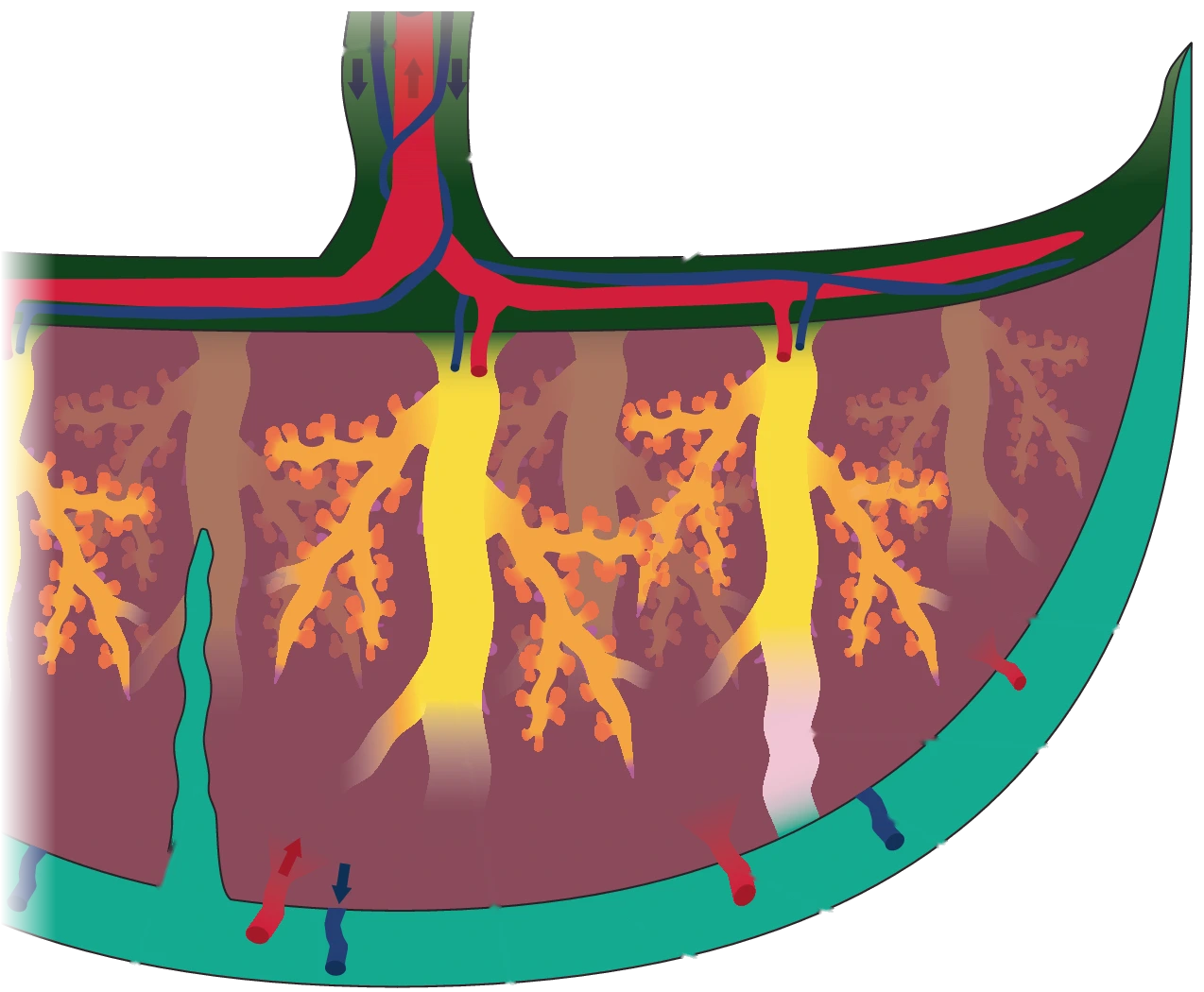
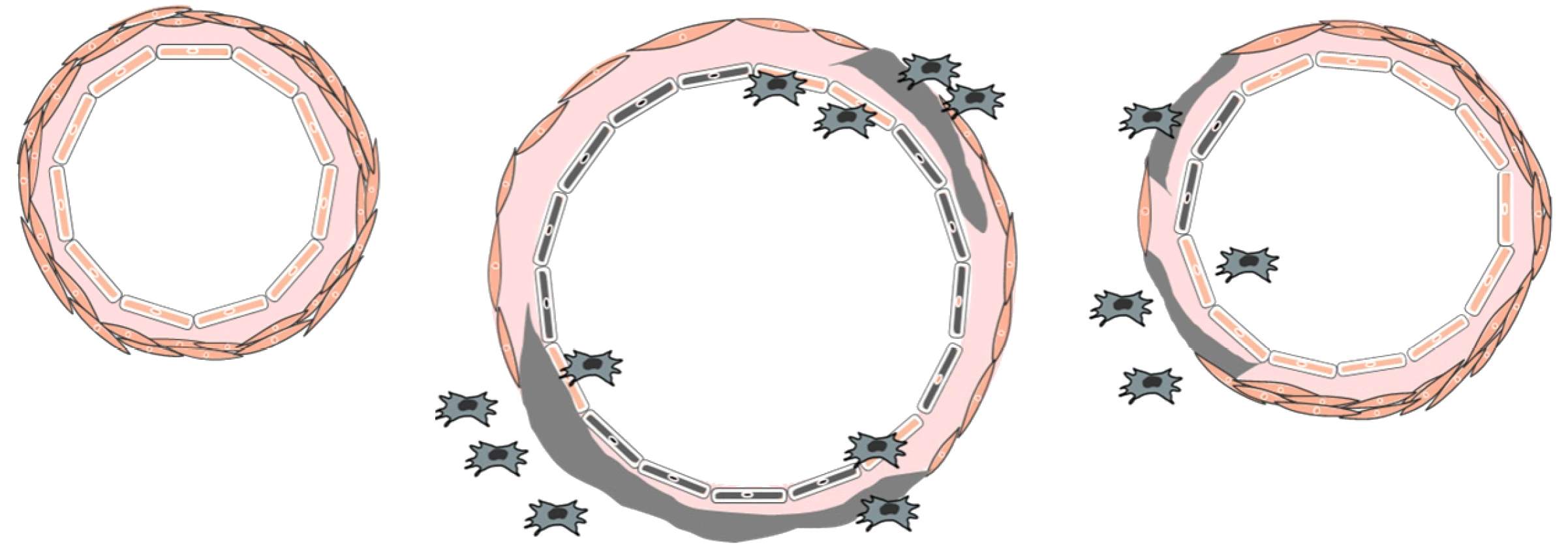
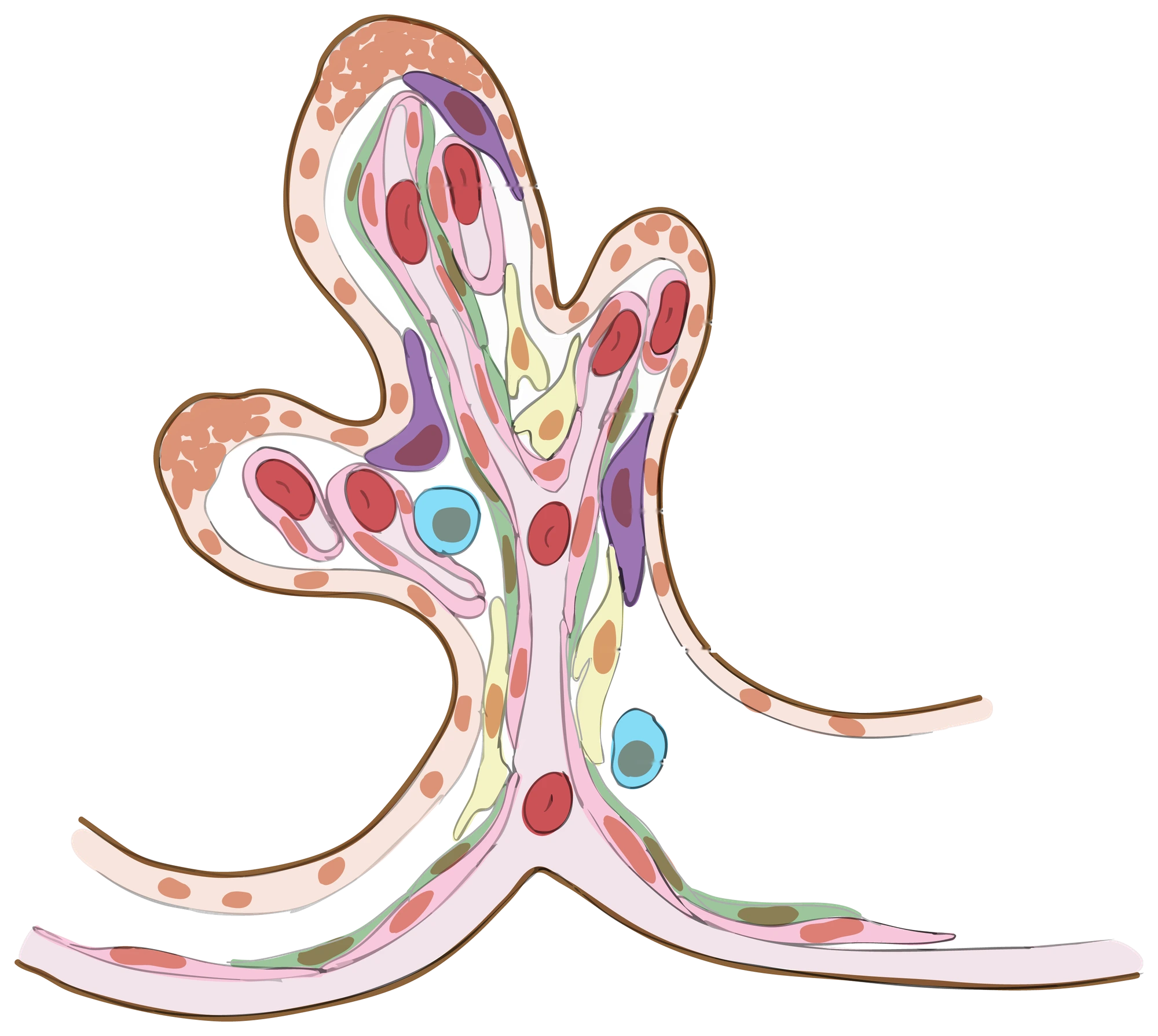
Diagram of a placenta: the umbilical cord at the top, branching villi inside, and the mother’s arteries coming in at the baseSpiral arteryCarries the mother’s blood to the placenta

Organ

The placenta, where two blood supplies meet.

The baby’s blood runs through tiny branches called villi. The mother’s blood flows in from the spiral arteries and bathes them. Oxygen passes across, but the two never mix.

Three cross-sections of a spiral artery side by side in one diagram: before pregnancy, in a healthy pregnancy and in preeclampsia

Tissue

That artery was supposed to widen.

In a healthy pregnancy, the placenta strips this artery of its muscle and widens it. In many cases of preeclampsia, especially those that start early, the placenta falls short.

Drawing of a terminal chorionic villus: capillaries filled with red blood cells, wrapped in an outer layer of placental cellsThe baby’s capillaryIts red blood cells pick up oxygen from the mother

Villus

A villus, up close.

The baby’s blood is on the inside; the mother’s is on the outside. Between them, a very thin layer of cells lets oxygen and nutrients through.

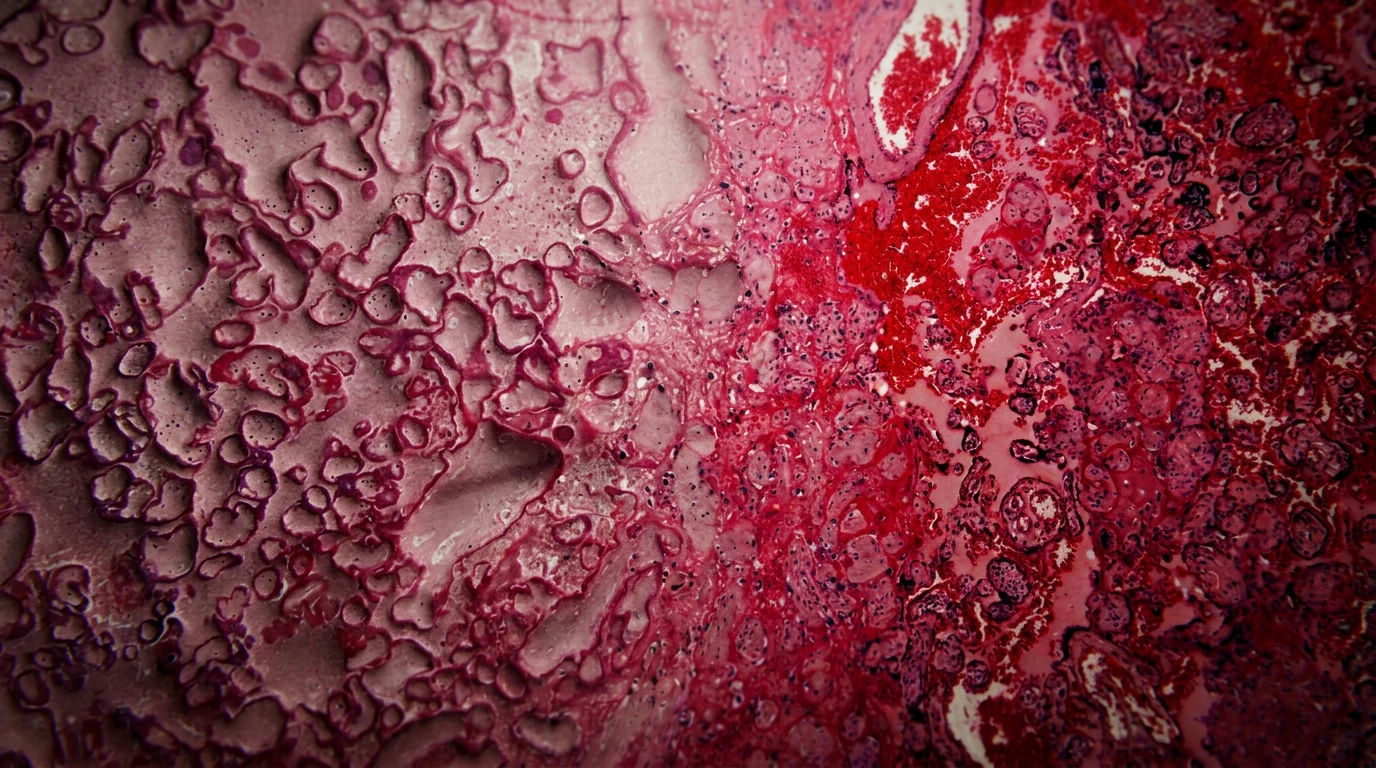
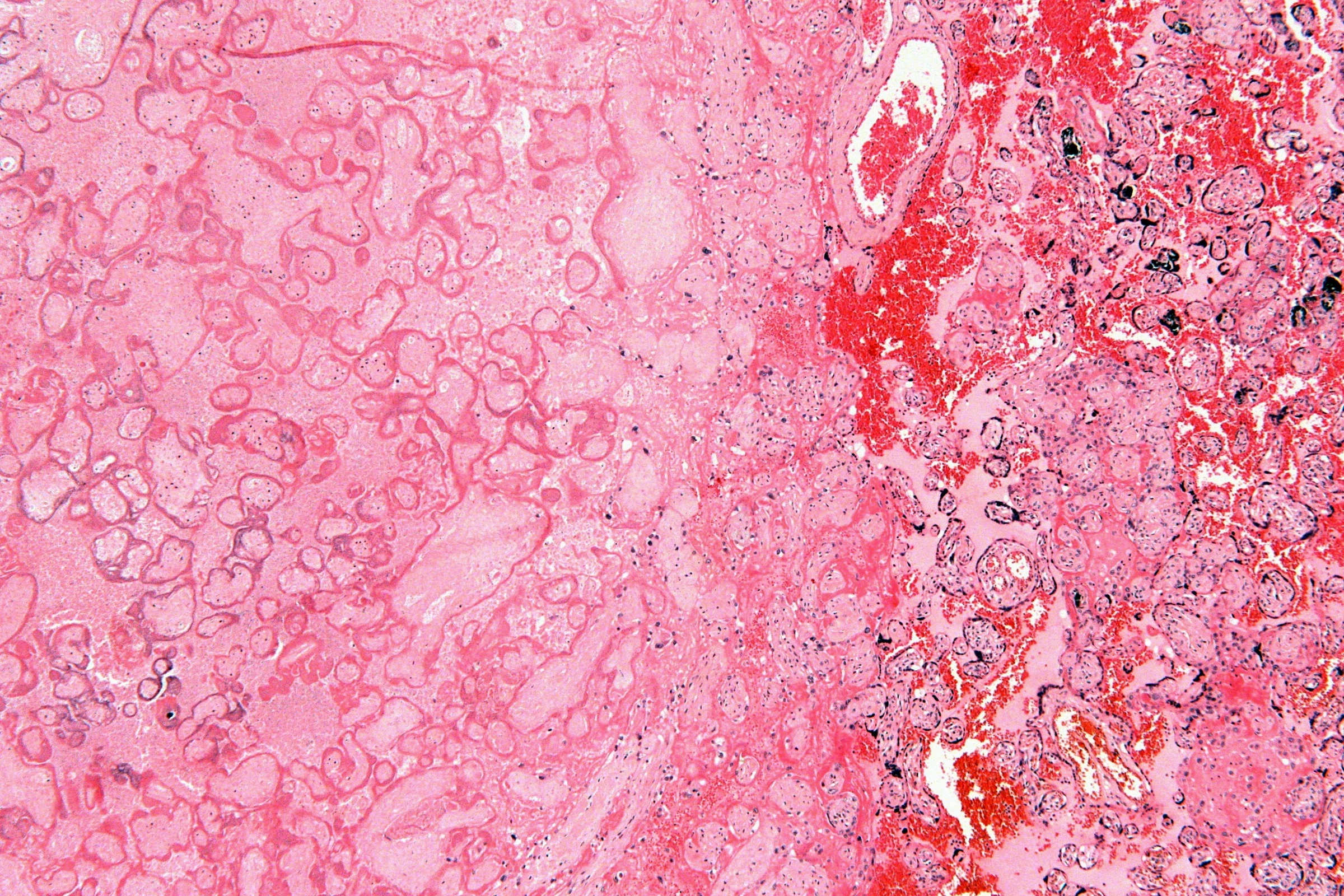
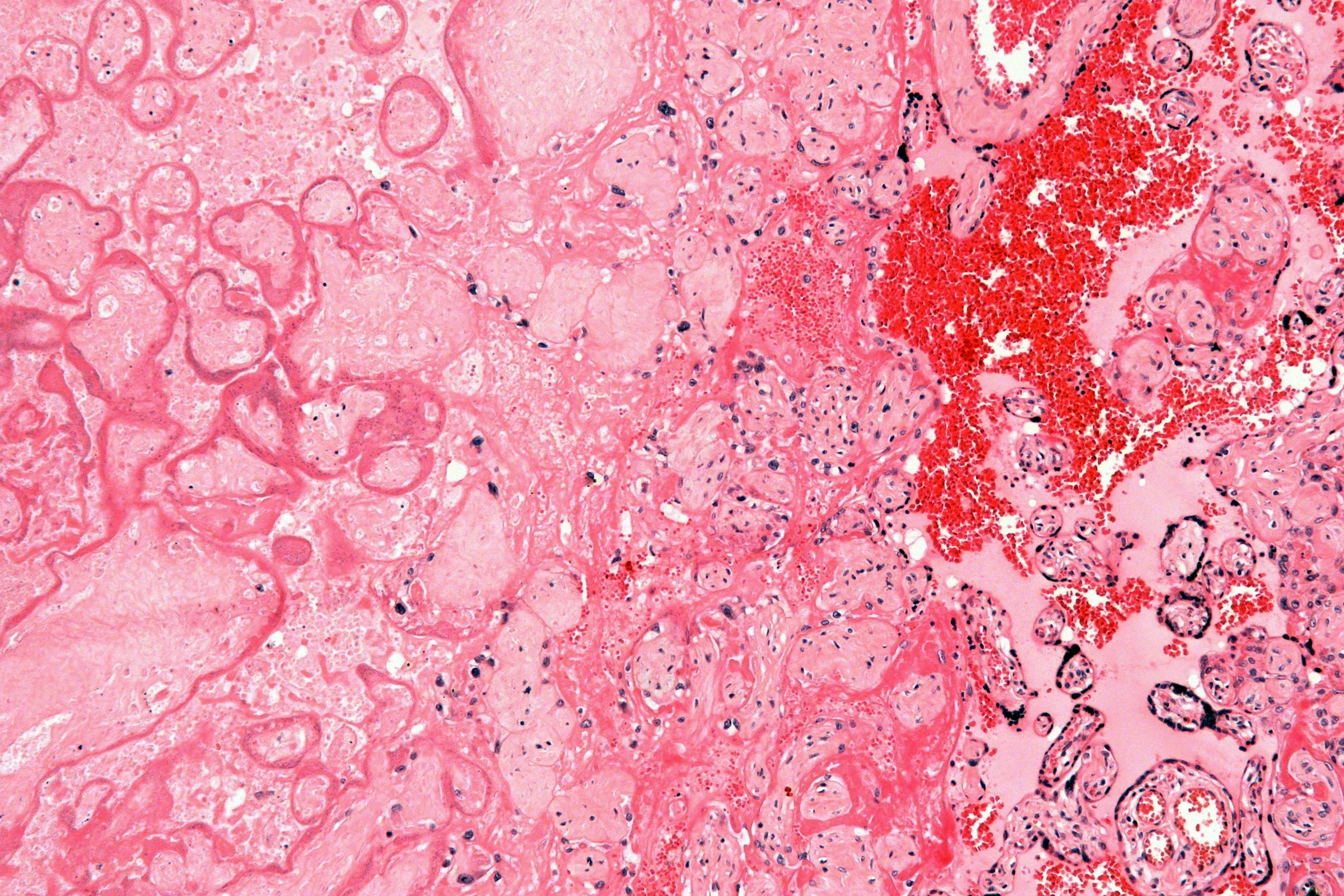
Placental infarct under the microscope: pale tissue on the left, tissue with blood on the right

Under the microscope

Where blood can’t reach, tissue dies.

On the left is an infarct: an area of placenta that died because it didn’t get enough blood. The H&E stain colors the nucleus (the cell’s control center) purple and everything else pink.

Learn to read the slide

A closer look at the artery

It all comes down to how wide the vessel is.

Pick a pregnancy and look at the muscle in the artery wall.

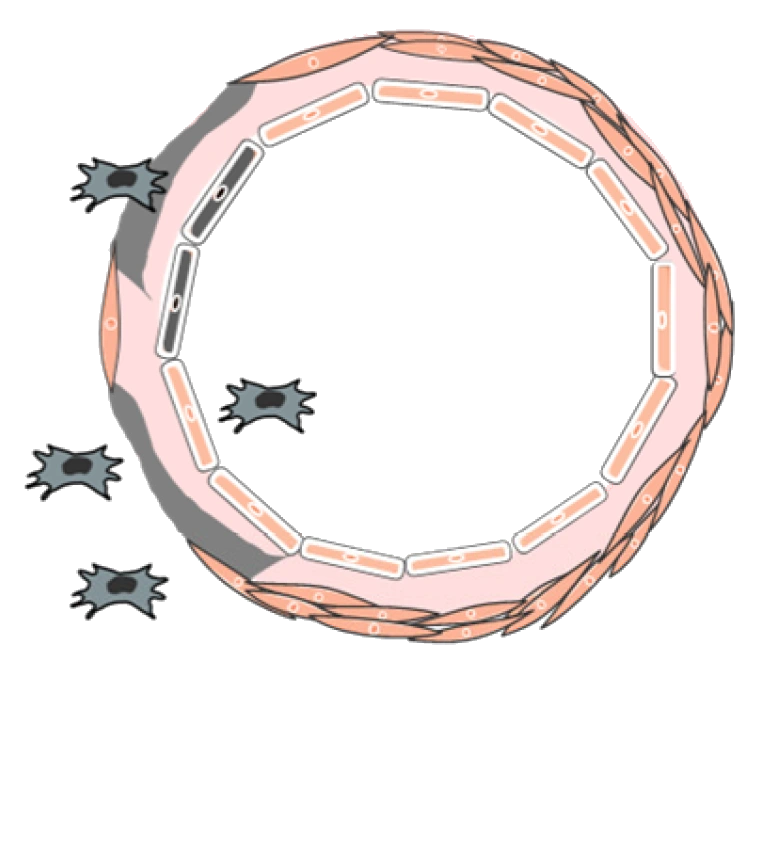
Spiral artery in a healthy pregnancy: a wide channel and a thin wall, with fibrinoid material and placental cells

Healthy pregnancy

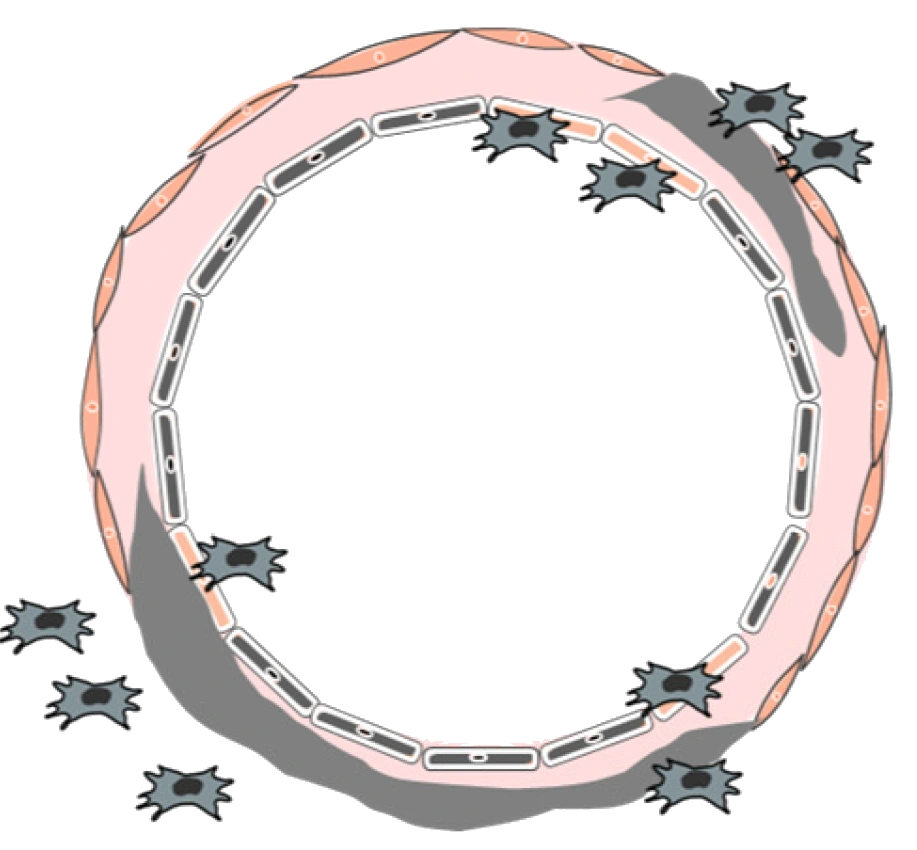
Spiral artery in preeclampsia: a narrower channel and a wall that keeps its muscle, with placental cells stuck on the outside

Preeclampsia

Healthy pregnancy. Cells from the placenta (the trophoblast) replace the muscle in the artery wall with fibrinoid material. The artery is left wide open, and plenty of blood gets through.

Under the microscope

A healthy placenta and an infarct, side by side.

First, healthy tissue

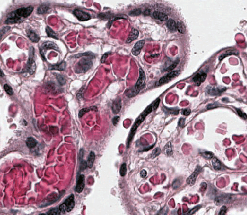
Terminal villi from a healthy placenta stained with hematoxylin and eosin: purple nuclei and capillaries filled with red blood cells
Healthy full-term placenta.Purple nuclei, and capillaries filled with red blood cells: disks with no nucleus.
Placental infarct stained with hematoxylin and eosin: pale tissue without nuclei on the left; villi with purple nuclei and red blood on the right
Overview.

On the left, the infarct: pale and crowded, with no blood and almost no nuclei. On the right, placenta with blood flow: purple nuclei and red blood.

Compare whether nuclei and blood are present, not how big things are.

From the placenta to the mother’s whole body

So why does the mother’s blood pressure go up?

The infarct isn’t what raises blood pressure. It’s the mark left behind by poor blood flow. A placenta with poor blood flow releases substances that disrupt the mother’s blood vessels, especially in preeclampsia that starts early. The exact cause is still unknown.

It can damage the kidneys, liver, brain and blood

That’s why urine is also tested for protein: it’s a sign the kidneys are struggling.

HELLP syndrome

Hemolysis (red blood cells breaking apart), elevated liver enzymes and low platelets. Sometimes it’s the first sign, even without high blood pressure or protein in the urine.

What you can control

It can’t always be prevented. But it can be caught in time.

There’s no sure way to prevent it, and you often can’t feel it. What changes the outcome is finding it in time.

What you can do

Go to every prenatal visit, starting early, and keep going to your checkups after delivery too.

Checking your blood pressure and testing your urine and blood can find it, even when you feel fine.

After delivery

The risk doesn’t end when the baby is born.

Preeclampsia can show up as late as six weeks after delivery, even with no warning signs beforehand. Delivering the placenta is the definitive treatment, but recovery takes days or weeks.

What about aspirin?

Only if your doctor recommends it.

For people at high risk (preeclampsia in a past pregnancy, high blood pressure or diabetes before pregnancy, kidney or autoimmune disease, or twins), a low dose after week 12. Don’t start it on your own.

If you’ve had it

Bring it up at your checkups, even years later.

It raises your risk of high blood pressure and heart disease. Get your blood pressure checked regularly.

If you’re diagnosed

You and your care team decide when to deliver.

It depends on how far along you are, how severe it is and how the baby is doing.

I’m your friend, Dr. Carlo De la Sancha. Health and science for everyone.

Keep learning

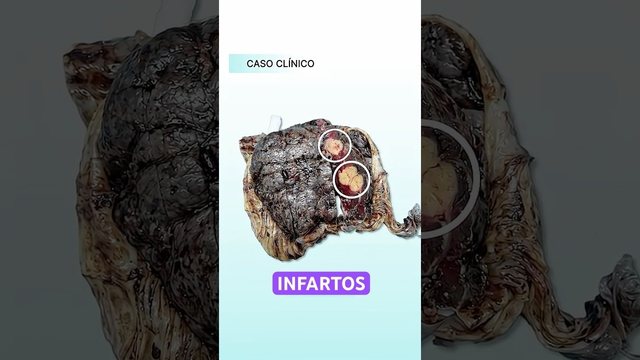
What does a placenta with infarcts look like?

This placenta has infarcts .. this is how preeclampsia works from the insideWatch the video “This placenta has infarcts”
Medical transparencySources, images and licenses

Where the information comes from

Images

In the diagrams, the original English labels and their leader lines were erased or cropped out, and the white background was made transparent; none of the anatomy was redrawn. The opening microscope image is a version of the cited micrograph with more depth and contrast. The images in the comparison were only cropped and adjusted for brightness, contrast or sharpness.

Educational content for the general public. It doesn’t diagnose preeclampsia or replace a visit with your health care team: diagnosis and decisions depend on your blood pressure, your test results and your team’s evaluation.

Know someone who would find this helpful?

Share it with them.